
CONTENTS








Many tend to think of momentum as something sudden, such as a breakthrough moment or a decisive step forward. Yet in the life of a university, momentum is more often built steadily: through leadership, innovation, partnerships, and the collective commitment of a community determined to shape the future with purpose.
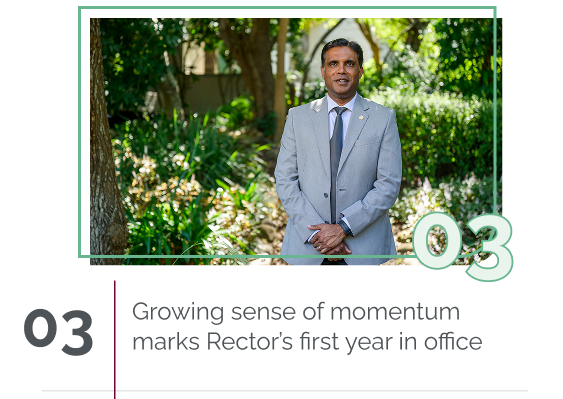
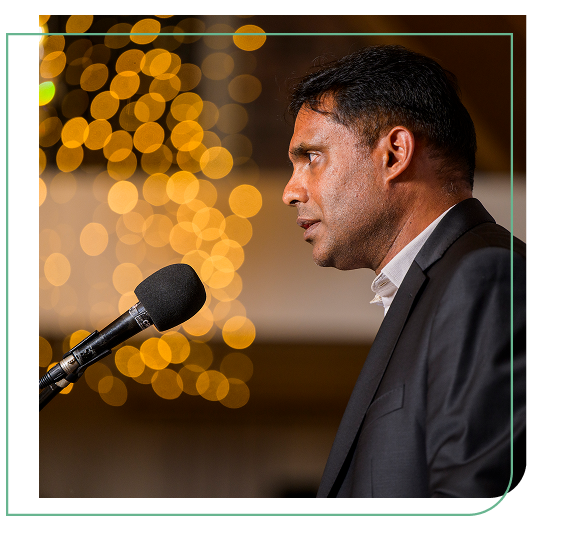
Over the past few months, Stellenbosch University (SU) has continued to build momentum in meaningful ways. Rector and Vice-Chancellor Prof Deresh Ramjugernath’s first full year in office offers a good opportunity to look back on a year characterised by engagement, vision, and a strong focus on advancing academic excellence, impact, inclusion and sustainability.
At the same time, the election of SU’s new Council chair, Mr Bernard Fick, signals another important step towards even stronger governance and stewardship at the University. Leadership transitions provide opportunities for both renewal and continuity to ensure that an institution such as SU remains agile, accountable and responsive in a rapidly evolving higher education landscape.
Innovation also continues to find practical expression across our campuses and beyond. The launch of the Maties Driving Academy reflects a commitment to student development that extends beyond the classroom, equipping students with essential life skills that support independence, employability, and access to opportunity.
Our global SU network continues to grow in reach and influence. The launch of new alumni chapters in Tanzania and Malawi reflects the enduring strength of the Maties community across borders and generations. These chapters not only deepen connections among alumni, but also strengthen the University’s presence and partnerships across Africa.
Collectively, these developments are evidence of an institution on the move. They attest to a university that is intentionally building momentum by investing in people, embracing innovation, strengthening leadership, and cultivating meaningful connections locally and globally.
As always, thank you for journeying with us as we continue to bring you the stories that shape the Maties community and its impact in the world.
Enjoy the read.
Blanché
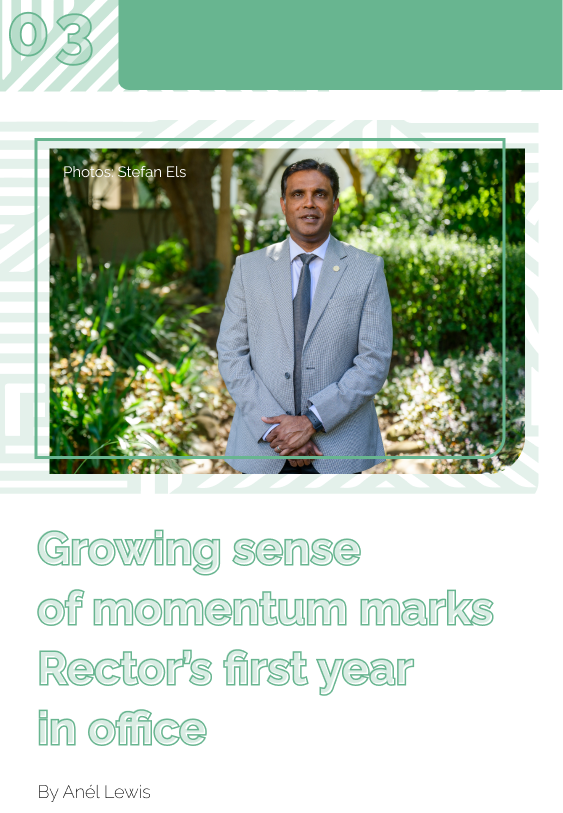
Leadership shifts are often accompanied by bold announcements and quick wins. Yet Prof Deresh Ramjugernath, who in April completed his first year in office as Stellenbosch University’s 13th Rector and Vice-Chancellor, has chosen a different path, having spent the year steadily setting a new long-term direction for the University.
Looking back on the past 12 months – his first year at the helm of Stellenbosch University (SU) – Rector and Vice-Chancellor Prof Deresh Ramjugernath says the end goal is to position the University for long-term impact. This is why the year has not been defined by a single moment, but by a steady and growing sense of momentum and shared responsibility.
He has engaged with more than 4 000 students, staff, alumni and partners to strengthen relationships, consider concerns and chart the course forward.
Part of this transition has been a “deliberate process of institutional realignment” to position SU for sustainable growth, Prof Ramjugernath says. This includes, for instance, the introduction of three new Pro-Vice-Chancellor leadership roles. These strategic positions are intended to support institutional priorities without overlapping or intercepting existing roles in the University’s governance, management and academic structures.
Reflecting on the changes introduced since he stepped into the Rector’s role, Prof Ramjugernath says: “There’s a clearer sense of direction, a stronger alignment around Vision 2040, and a growing understanding that we all have a role to play in delivering on that vision.”
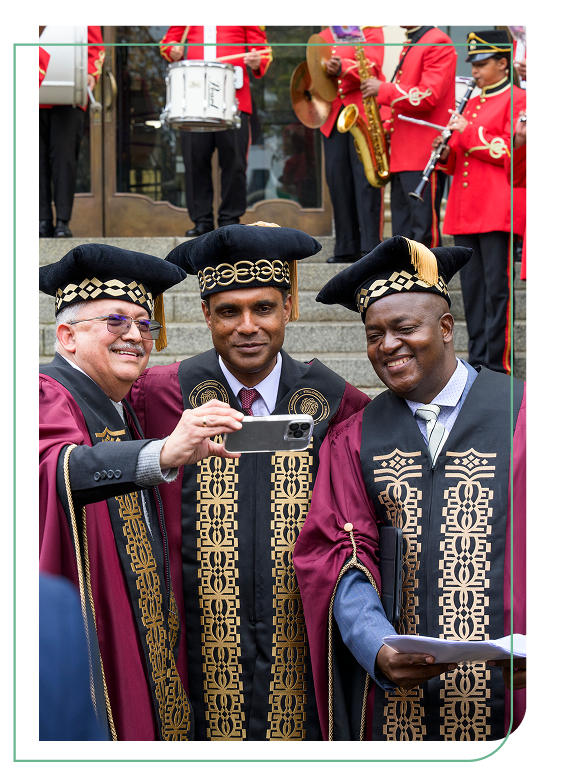
Being intentional about being excellent
For a university with an established global standing, excellence is a non-negotiable. But Prof Ramjugernath is clear that excellence cannot be an end in itself. “The question is not whether we are excellent,” he says, “but how that excellence translates into impact in our teaching, in our research, and in our contribution to society.”
In a South African context characterised by inequality, economic pressure and complex social challenges, this mindshift matters. The University’s role goes beyond producing knowledge. It is about putting that knowledge to work by helping to grow the economy, shaping better public policy, and preparing graduates with the skills and perspective to lead and make a difference in a changing society.
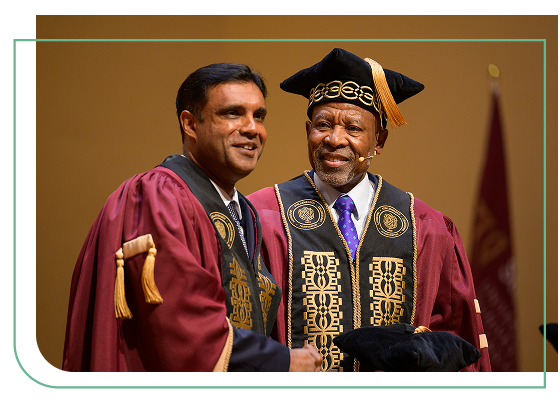
Inclusion makes us stronger
Inclusion is another ongoing priority. While some mistakenly believe that opening the doors wider could somehow lower the ceiling, Prof Ramjugernath views inclusion as a driver of excellence. “The future of SU depends on our ability to attract and support talented people from all backgrounds,” he emphasises. “Inclusion is not a separate project. Rather, it is fundamental to academic quality and institutional legitimacy.”
He sees language as a strategic opportunity for inclusion; not a divider. “As a multilingual institution, we have a responsibility to widen access and deepen inclusion, while remaining globally competitive.” SU’s overarching identity, he emphasises, must be “unmistakeably African” – rooted in its context and responsive to its communities.
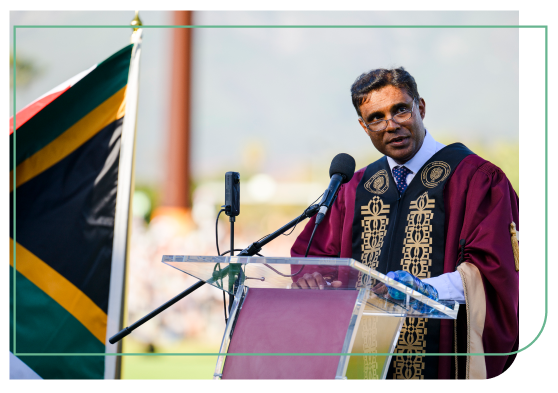
Innovate for meaningful change
SU is arguably one of the country’s most active innovation universities. Its technology transfer office, Innovus, has to date supported 44 spinout companies and is among the country’s leading patent filers. One of the standout successes is CubeSpace, an SU aerospace spinout that provides satellite guidance systems to over 290 clients globally. In 2025, the LaunchLab business incubator also opened the CERIBIO biotechnology laboratory, which offers SU biotechnology spinouts state-of-the-art laboratory space and equipment for research and development.
But, says the Rector, “innovation on its own is not enough. It must translate into meaningful change”. He plans to sharpen the focus on research outcomes and how these translate into practical, tangible impact. Through partnerships that amplify SU’s reach, ideas can move beyond the laboratory and lecture hall to help address urgent societal challenges.
Moving forward
that the foundations have been laid, SU is moving forward with clarity and purpose. There is a shared commitment to progress. This means advancing excellence, deepening transformation, and strengthening our role as a research-intensive institution in and for Africa,” he concludes.
“The focus now is on building momentum and ensuring that our vision translates into measurable, meaningful impact for our students, our staff, and the communities we serve.”
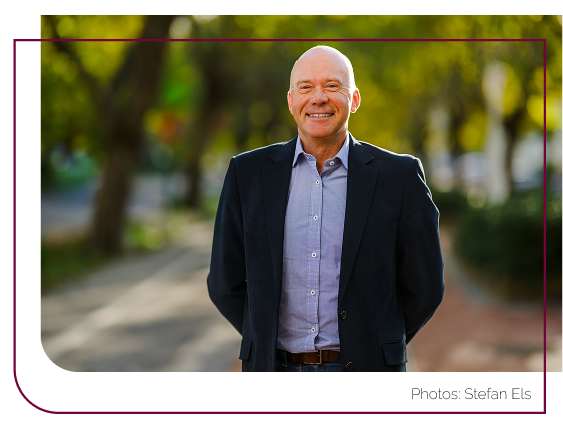
At a scheduled meeting in April, the Stellenbosch University Council elected Bernard Fick as its new chair – an honour he accepted “with some trepidation”, but with a clear sense of responsibility, and a focus on the bigger picture.
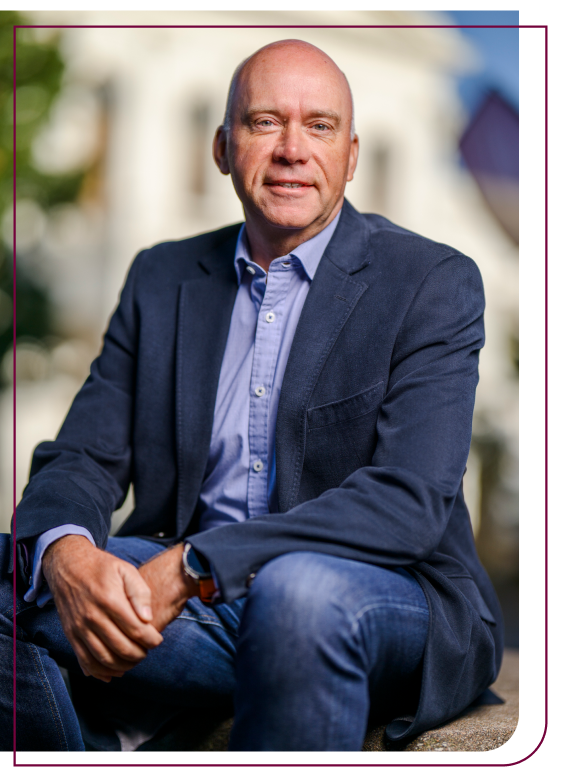
Speaking outside Admin B on Stellenbosch campus, where he will now be presiding over Stellenbosch University (SU) Council meetings, newly elected Council chair Bernard Fick’s leadership style comes across as one of humility and quiet resolve.
At its core, he sees Council’s role as enabling rather than directive. “Our responsibility,” he explains, “is to guide and support the Rector and his management team in the execution of a clearly articulated strategy.” That strategy includes academic excellence, stronger partnerships, sustainability, and strengthening institutional culture and processes.
Borrowing a governance phrase, Fick describes Council’s role as “noses in, fingers out” – being engaged and informed, but without interfering in operations. “But should the need arise, I will guide Council to act decisively,” he adds.
An immediate priority is alignment. “There is strong support within Council for the Rector’s vision,” he says. At the same time, however, Council must be willing, when necessary, to be “sceptical and critical” in order to ensure accountability.
Navigating complexity
Fick, who has served on Council since 2024 as a donor-elected member, steps into the role of chair as universities face major questions around artificial intelligence, the changing value of formal qualifications, inequality, and a constrained labour market.
“We need to ask ourselves how we can achieve an appropriate balance between degree-based academic qualifications and vocational and on-the-job training,” he says. “And how can we improve graduate employability in an economy that is not creating enough jobs?” For SU, these questions form part of an urgent conversation about how the institution can contribute meaningfully to South Africa’s development.
A focused agenda
Top of the agenda for now includes finalising the key appointments of Chief Operating Officer, Chief Financial Officer, Chief People Officer, and a new University Ombud. “It is often said that the most important function of a company’s board of directors, which Council essentially is, is to appoint the best possible senior executive team,” Fick notes, “so I will take a keen interest in these appointments.”
He has also called for renewed attention to the student experience, particularly around service delivery. “There are understandable reasons for the challenges we have seen, which have largely arisen from the recent SUNStudent and SUNFin system implementations,” he says, “but we must do better.”
Balancing sustainability with access
With more than three decades in finance, Fick brings extensive experience to Council’s stewardship of SU’s long-term sustainability. Rising student debt, delayed payments by the National Student Financial Aid Scheme (NSFAS), the proposed regulation of fee increases and shrinking subsidies are placing increasing pressure on universities. Yet he remains cautiously optimistic, citing SU’s strong balance sheet, research reputation, and the continued generosity of donors and alumni.
Balancing sustainability with student access remains one of Council’s toughest responsibilities. “There is, unfortunately, no simple answer to this question, and it is something that we discuss at nearly every Council meeting,” Fick says. To ease the pressure on financially vulnerable students, Council has supported top-up bursaries, flexible registration arrangements, innovative loan schemes, and the work of the University’s Student Debt Task Team.
“Yet we must also hold a long-term view of the sustainability of the institution, and of the range of demands on its resources,” he notes.
Transformation and belonging
Returning to his alma mater decades later, the 1992 SU graduate says he has been struck by the transformation of the student body. At his daughter’s graduation a few years ago, he was moved by the diversity of students crossing the stage.
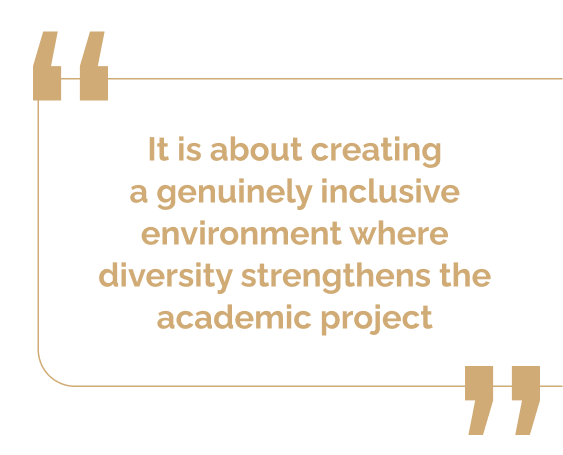
Transformation, he says, goes beyond numbers. “It is about creating a genuinely inclusive environment where diversity strengthens the academic project.”
Playing the long game
His fondest SU memories include meeting his future wife, a “beautiful first-year Music student” at the Ertjieskloof dam, and watching former President FW de Klerk announce Nelson Mandela’s release on television in Dagbreek residence.
His advice to students is short and simple: Work hard and build lifelong friendships.
Fick remains deeply connected to Stellenbosch, whether cycling in Jonkershoek, enjoying coffee at Motherdough or Hygge Hygge, or playing golf, “most of the time on the fairways”.
In fact, golf is perhaps the best metaphor for his leadership style: patience, perspective, and the knowledge that meaningful progress comes from playing the long game.
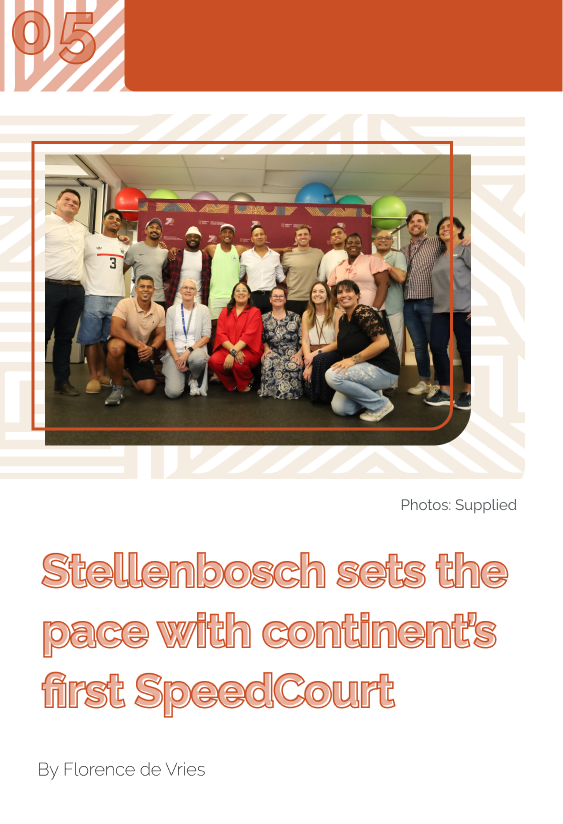
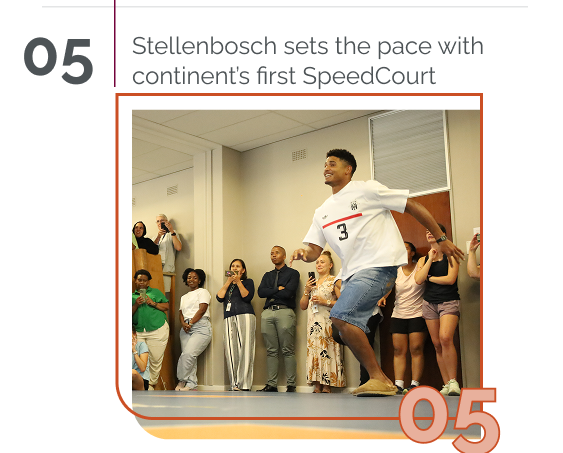
Boasting Africa’s first SpeedCourt – a high-tech flooring system that is used for measurement and training in sports and rehabilitation – the 70-year-old Maties medical faculty has again shown why it is considered a leader in its field both locally and internationally. Over the next six months, the technology will be used in a staff challenge that is set to drive wellness, innovation and research.
In April, Springbok, Stormers and Sevens rugby players joined staff from the Faculty of Medicine and Health Sciences (FMHS) at Stellenbosch University (SU) for the official launch of an internal six-month competition that will see faculty teams engage first-hand with FMHS’s new SpeedCourt technology.
The German-made SpeedCourt, housed in the Faculty’s Division of Physiotherapy since last year, is an elite diagnostic flooring system that uses pressure-sensitive sensors to measure agility, reaction time and cognitive processing in real time. This instant feedback offers comprehensive insights into both physical and cognitive performance, bridging the gap between clinical rehabilitation and high-performance athletics.
The system installation was facilitated by Prof Quinette Louw, distinguished professor and executive head of the Department of Health and Rehabilitation Sciences, and Prof Jochen Baumeister from Paderborn University, Germany, who also serves as an extraordinary professor in SU’s Division of Physiotherapy.
Holistic brain-and-body training
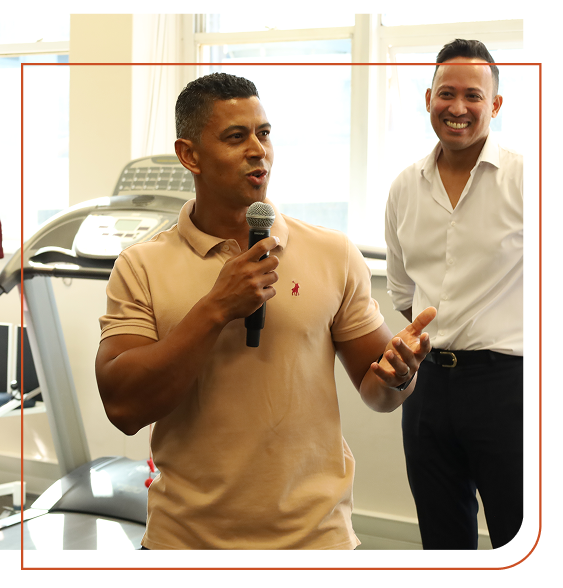
“The SpeedCourt is an innovative approach to performance training and rehabilitation that ensures that patients not only recover faster, but perform smarter,” says Dr Aneurin Robyn, head of Medical Coordination for the South African Rugby Union (SARU) and proud FMHS Physiotherapy alumnus. Conventional rehabilitation has traditionally separated physical recovery from cognitive readiness, addressing movement, strength and fitness in isolation before returning an athlete to sport, Dr Robyn explains. The SpeedCourt changes this by layering cognitive demand onto physical performance, allowing clinicians to assess and train the brain and body together in conditions that more closely replicate the real-time decision-making pressures of competitive sport.
Dr Robyn’s PhD research on return to play (RTP) in elite rugby players after severe knee injuries highlighted that players’ decision-making speed is often measurably impaired at the point of RTP, even when physical benchmarks have been met. “This tells us that physical readiness alone is not sufficient,” he says. “Therefore, tools such as the SpeedCourt that are capable of objectively quantifying cognitive-motor performance are not just useful additions, but necessary ones.” To him, the system, which is validated by research and trusted by leading clubs globally, is a meaningful step forward from the largely subjective assessments that have historically informed return-to-sport decisions.
Staff challenge starts in style
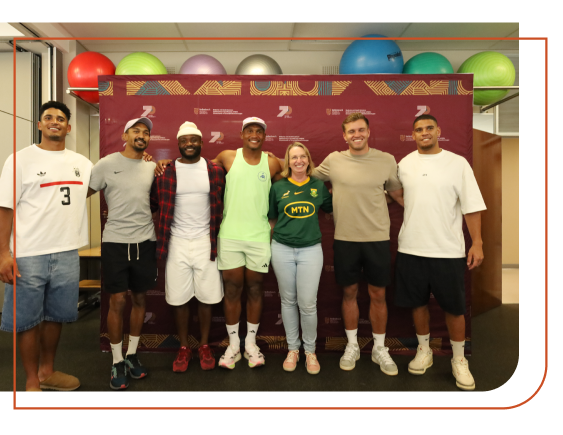
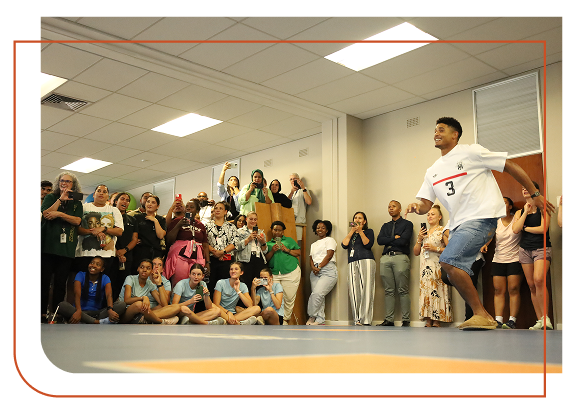
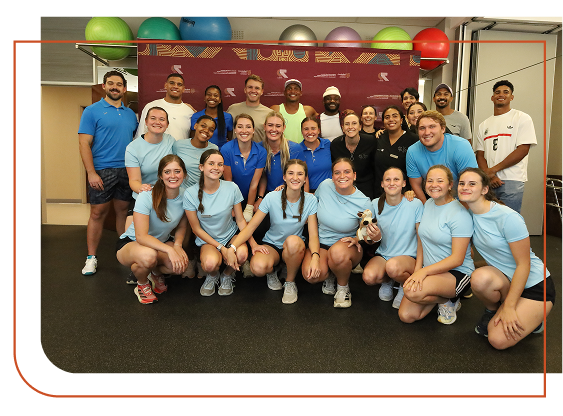
For the SpeedCourt Challenge, 14 faculty teams will be competing against one another, using this leading-edge technology to track their physical and cognitive data, while fostering a culture of wellness and innovation to boot. The presence of rugby sensations Sacha Feinberg-Mngomezulu, Damian Willemse, Daniel du Plessis, Seabelo Senatla, Zain Davids and Tristan Leyds at the competition launch added some star power and underscored the significance of the SpeedCourt facility. Feinberg-Mngomezulu stepped onto the sensors to demonstrate the explosive footwork and rapid decision-making that the SpeedCourt is designed to refine.
Science for society in action
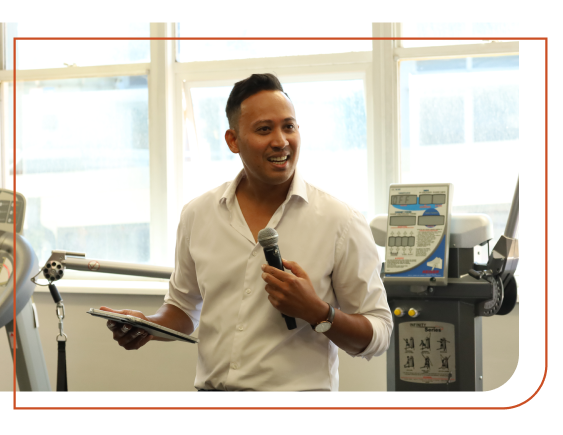
Aside from being of strategic importance to the Faculty, the SpeedCourt installation could also be of significant value to broader society, says Prof Conran Joseph, who heads up the Division of Physiotherapy. “Our goal is to position FMHS and the Division of Physiotherapy as the premier destination for the clinical rehabilitation of individuals with neurological, musculoskeletal and cardiopulmonary conditions that affect mobility,” he says. “At the same time, our vision is to enable the use of world-class technology, such as the SpeedCourt, by sporting groups nationwide, ranging from amateur to professional levels.”
The SpeedCourt also opens up exciting opportunities for research between and across disciplines, Prof Joseph adds. “These include evaluating dual-task interference following acute stroke or acquired brain injury, testing treatment protocols in sports medicine, and developing innovative biomedical mobility devices that are, firstly, safe to use and, secondly, tested under diverse contextual conditions. The possibilities are indeed extensive.”
The hope is that the technology will be embraced by other South African and African institutions. “In doing so, it has the potential to enhance institutional capacity, strengthen research impact, and contribute meaningfully to broader health priorities across the country and continent,” Prof Joseph concludes.
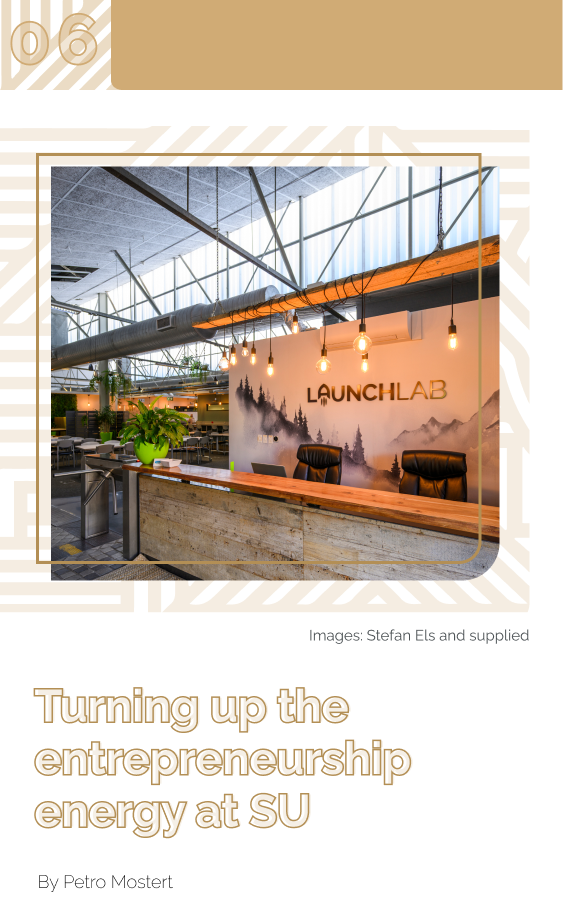
Twenty years ago, innovation and commercialisation at Stellenbosch University (SU) comprised a holding company with not even a handful of spinout companies, all technology-based, and a small basement office that mainly handled patent paperwork. Yet that modest start sparked a momentum that has since generated a portfolio of 44 spinouts (and counting), a LaunchLab that hums with activity, a University Technology Fund already in its second phase, and companies that are reaching international markets and attracting global investors. We look back on this journey with one of the main champions of SU’s growing entrepreneurial culture.
In 1999, Genetics professor Monroe Marx approached then Deputy Vice-Chancellor: Operations Prof HC Viljoen with an idea: to turn his research into a company. That meeting led to the creation of Unistel Holdings, as well as one of SU’s first spinouts, Unistel Medical Laboratories. It also marked the start of what is today the Innovus Technology Transfer Office. Back then, the main objective was rather simple: to protect the University’s intellectual property, file patents, and see what happens.
A solid but slow start
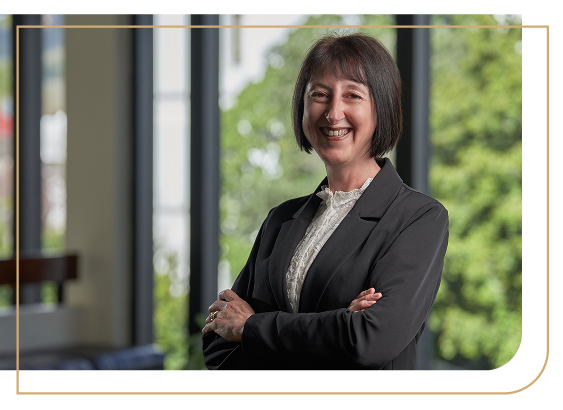
Things didn’t exactly take off overnight, says Anita Nel, SU’s chief director of Innovation and Commercialisation. “For many years, the main goal was to protect intellectual property, and not really to commercialise or build companies around it. The early technology transfer office was called the Office for Intellectual Property and did important work, but the turning of research into businesses was not a mainstream idea.”
By the early 2000s, it became clear that something had to shift. “Licensing alone was not delivering the kind of impact the University was aiming for. The value created through research often ended up abroad, with only a small return to the University in the form of royalties,” Nel explains. “We realised that if we wanted to have a spinout portfolio, we needed to provide excellent support, not just good support.”
That realisation was the start of a more focused approach that would pave the way for how SU helps build startup companies today.
The lifecycle of a startup
Nel emphasises that new technology takes time to develop. Professors and their postgraduate students may research and explore a concept for years or even decades, and eventually, their work can grow into something bigger. “Then, at some point, it becomes a commercially viable product or service, and the researcher wants to set up a company,” Nel explains. “Yet the professor does not usually leave SU to run the startup. Instead, that responsibility often falls to one or more of their postgraduate students, who have little to no experience of the private sector.” And that’s precisely why the support model should be bold, ensuring that every stakeholder gets the right kind of help.
Taking it up a notch
By 2009, the mindset had changed, Nel says. “To build a strong spinout portfolio, SU needed more than just good ideas. We needed infrastructure and funding, and a way to support people who had never run a company before.” The answer came in layers and over time.
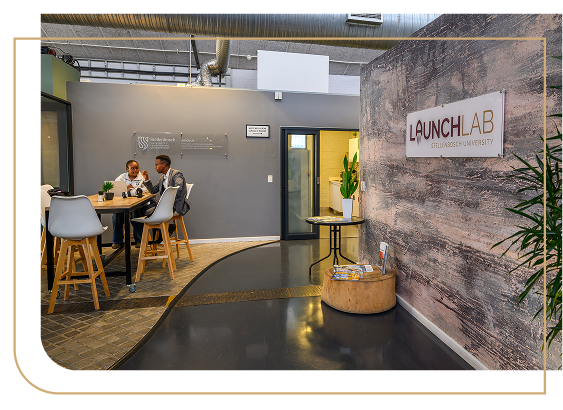
First, the University began building an incubator, today’s SU LaunchLab, which many people say marked the real shift. “Opening the LaunchLab in 2015 was genuinely a big gamechanger,” Nel says. For the first time, spinout activity had a real home. “Researchers visited the incubator, saw their peers opening companies, and started believing they could do it too.”
Strong liftoff
The support package offered by the LaunchLab has evolved significantly over time. The team now offers hands-on support through their ‘concierge’ service, helping with everything from company registration and domain names to tax certificates and compliance. “The concierge actually sets up the company and makes sure there is a proper website, a company logo, company secretarial services and much more,” Nel explains. “That is followed by deeper, strategic support.”
The LaunchLab also brings in experienced professionals who join companies part-time to guide operations, make connections, and help founders tackle new challenges. “We parachute these fractional CXOs into some of the companies to take on roles such as marketing or help with raising investment or product development.
“I have not really seen another university anywhere in the world that provides this level of wraparound support to startups,” Nel adds. “Very few universities offer post-incorporation support for their spinouts.”
Funding and fresh thinking
But the LaunchLab was just the beginning. “Keep in mind that university technology was not at all seen or considered as an investable asset class in South Africa prior to 2020. It was too early-stage, so there was little interest,” Nel says. At the same time, broader changes were happening nationally. For instance, the Intellectual Property Rights Act, which took effect in 2010, compelled universities not only to protect their intellectual property, but actively commercialise it.
To advance these imperatives, the team worked on creating a dedicated funding system to support university technologies at a very early stage, long before traditional investors would get involved. These efforts ultimately helped pioneer South Africa’s first University Technology Fund (UTF1), which was established in 2020.
The goal was to create a pipeline that moved from early-stage development to more substantial investment rounds so that technologies could grow step by step. “If an applicant succeeded with the pre-seed component of the fund, they qualified for the next round,” Nel explains.
The first fund made 24 investments in South African university spinouts. More importantly, though, it started to change perceptions. By the end of the first fund cycle, other investors had caught on, and local venture capitalists began co-investing with the UTF1. In 2024, UTF1 was depleted. Early the next year, a second fund cycle (UTF2) more than double the size of the first was launched and started investing. “What we now see is an influx of international investors interested in our companies,” Nel says.
Real solutions with a genuine impact
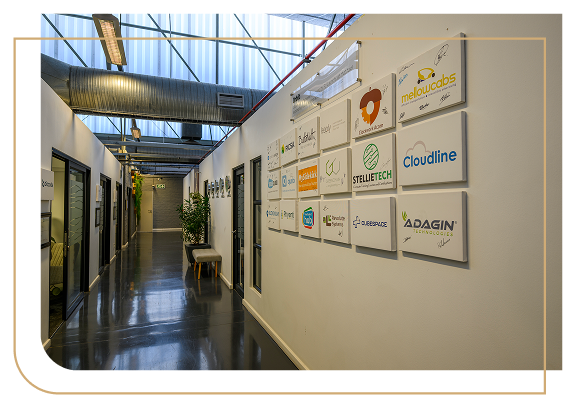
Today, the results are visible across multiple sectors. Many companies have been incubated through the University’s entrepreneurship system, including 44 SU spinouts, external startups, alumni startups and student ventures. Together, the SU spinouts generate over half a billion rand in turnover and employ about 500 people.
The impact of these companies is extensive. “They contribute to the local economy. They pay tax, they provide work,” Nel says. But they also bring much more to the table. “They develop new medical devices, find new ways to manage energy, and create technologies to improve drug discovery. Their impact is felt both locally and globally.” Nel is particularly pleased to see an increase in entrepreneurship uptake across genders. “When I started my career, I worked mostly with male entrepreneurs. But that is changing quickly as we see more women stepping into these roles. Generally, our teams are much more diverse than before.”
She reiterates what she said recently when accepting the 2026 Forbes Woman Africa innovation catalyst award: “Innovation has never been about disruption alone, but about purpose. It’s about creating solutions that matter – solutions from Africa for Africa and beyond.”
Full steam ahead
If the past decade was about building SU’s innovation and commercialisation system, the next will be about expanding it. “The LaunchLab is already full. Exciting plans are under way to grow the incubator both on campus in our faculties as well as beyond, including a new presence in the Stellenbosch Bridge innovation district,” Nel shares.
Events such as Sweat Africa are now also part of their growth story, she adds. The inaugural edition of this start-up and venture festival – the first of its kind in Africa – was hosted in Stellenbosch in February, bringing together founders, students, investors and partners in a way that feels uniquely local.
“Africa is rich with ideas, talent and resilience, and there is no limit to what we can build,” Nel concludes. “SU will continue to support entrepreneurship by expanding the ecosystem, attracting investors, connecting people, and inspiring innovation.
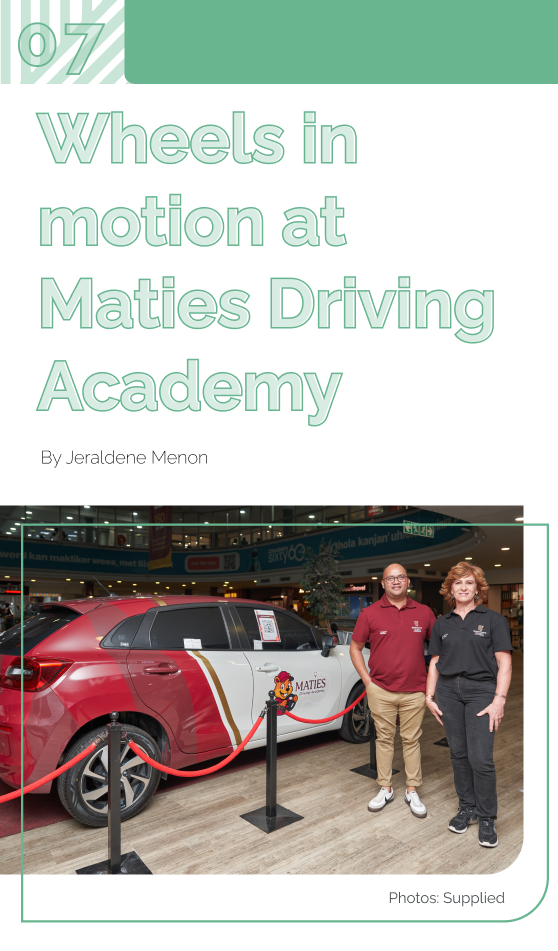
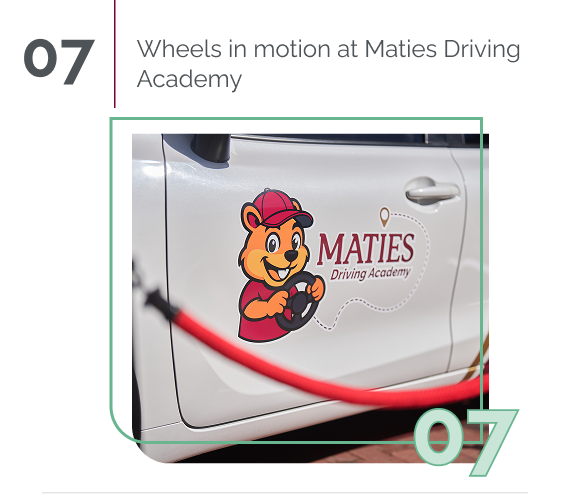
For many students, learning to drive sits patiently on the ‘I’ll get to it’ life list – somewhere in between exams, assignments and everything else that university life demands. Now, however, they can start that journey right here on campus.

Stellenbosch University (SU) officially launched the Maties Driving Academy in April. This initiative by the University’s Transport Services Department, a division of SUNCOM, is intended to help students drive with confidence.
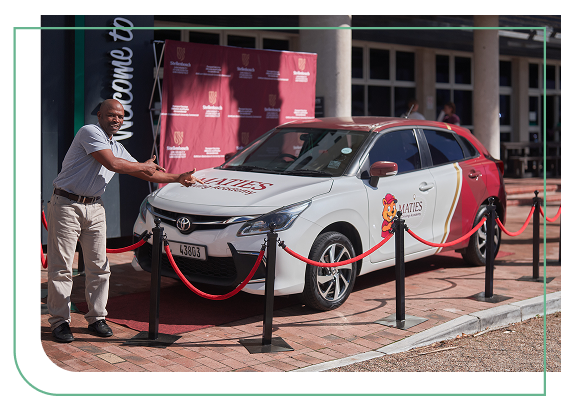
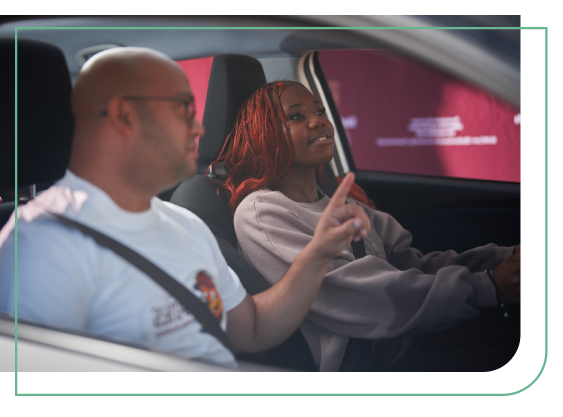
The Academy forms part of SU’s broader, student-centred approach to prepare graduates for life beyond university. In today’s world of work, mobility is often not a nice-to-have, but a requirement, influencing access to opportunities, internships and employment.


Across Africa, Maties alumni are reconnecting with their alma mater in growing numbers, taking on active roles in shaping the University’s future.
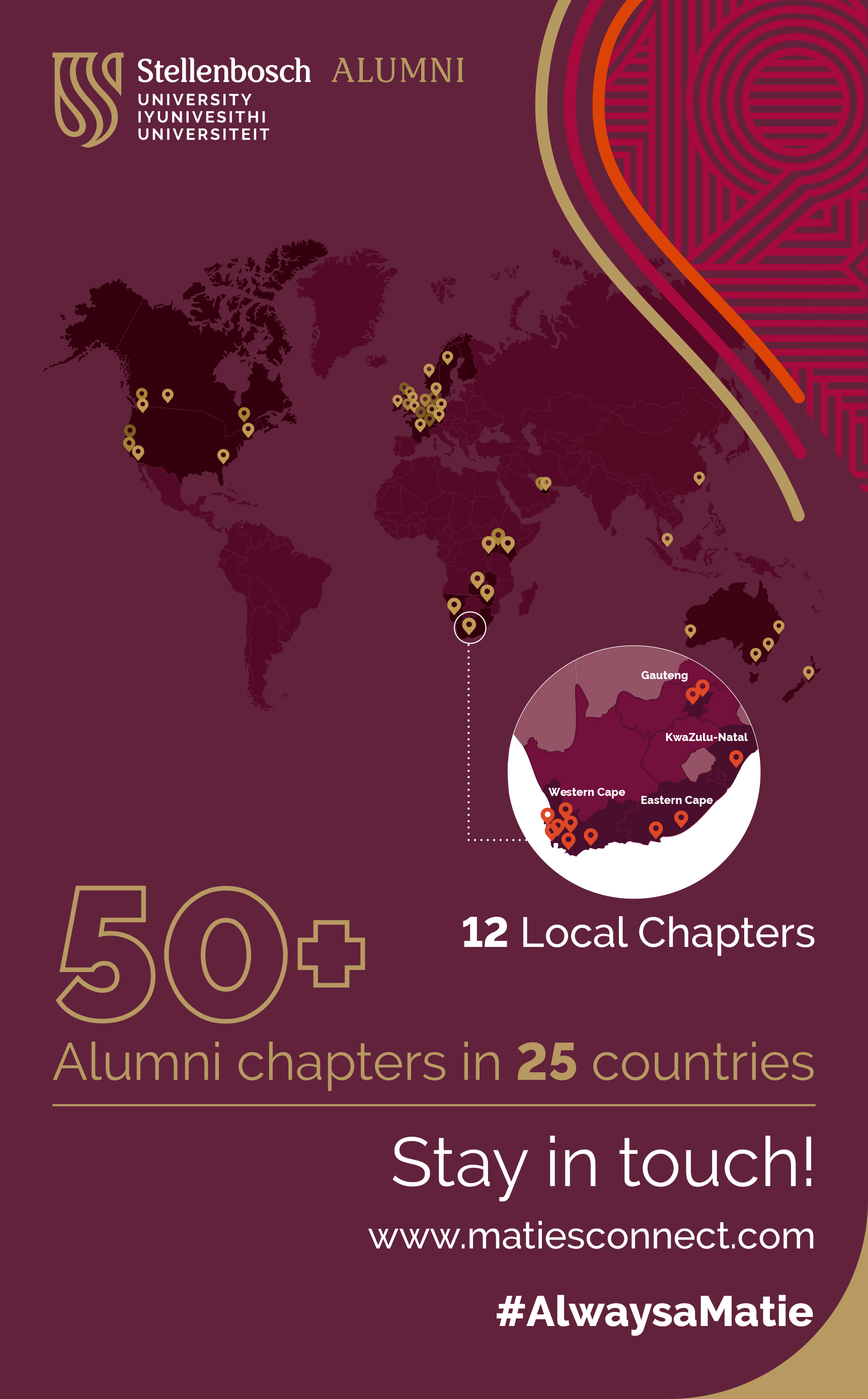
In May, a senior Stellenbosch University (SU) delegation will be visiting Kenya, Tanzania, Zimbabwe, Zambia and Malawi to strengthen alumni relationships and advance partnerships with other African higher education institutions and industry. A key moment on the trip will be the launch of new alumni chapters in Tanzania and Malawi.
By establishing alumni chapters, SU’s alumni spread across the continent create dedicated spaces for connection, mentorship and opportunity, advancing the institution’s vision of being a university in and for Africa.
In Tanzania and Malawi, four alumni have volunteered their time and expertise to help bring these chapters to life. “The global Matie network is a lifelong community comprising more than 200 000 graduates around the world,” says Ferdi van Dyk, SU’s manager of Alumni Participation. “The network creates structured platforms for our Maties to connect, access supportive career networks and share experiences.
“Through our chapters, alumni can also actively contribute to the University’s work by taking part in volunteer initiatives and increasing our regional engagement and presence,” Ferdi adds.
An opportunity to give back
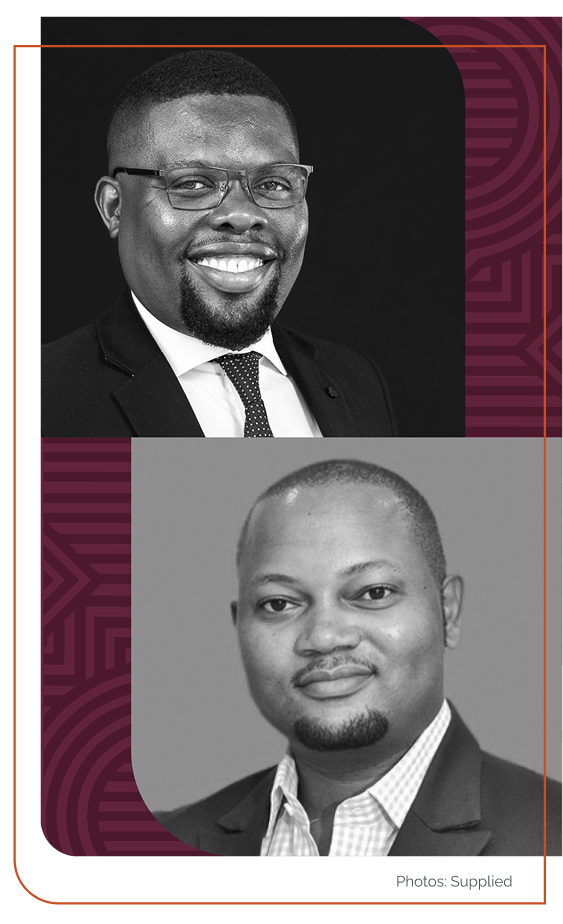
As the Malawi alumni chapter lead, Gabriel Musa has played a significant role in getting the chapter ready for its official launch on 23 May. The chapter will be a structured network for SU graduates living in Malawi and will serve as a platform for professional networking, career development, mentorship and collaboration, Musa says. At the same time, it will enable alumni to contribute to the broader community in a more organised and meaningful way.
“SU invests significantly in each of its graduates, so this chapter offers a valuable opportunity to give back while proudly representing the University,” he says. “For me, it is a platform for service, connection and continued engagement with the institution’s legacy.”
Musa is an information and communication technology specialist who graduated from SU with an MPhil in Information and Knowledge Management in 2016. He says the chapter is a way to support an institution that has shaped his personal and professional growth, as well as to connect with prospective students interested in studying at SU. “We have reached a large number of alumni and received encouraging commitments. There is strong enthusiasm, with many expressing that this chapter is long overdue.”
Asantie Mussa-Gama, a 2022 BCom Management Accounting graduate, also serves on the Malawi chapter’s organising committee. “I wanted to bring to Malawi the kind of alumni community I’ve seen in other countries,” she says. “I believe an SU community in Malawi will benefit not only me, but many others.” The idea is for the chapter to be a ‘home away from home’ for alumni, keeping the spirit of Stellenbosch alive long after graduation.
Stronger connections
Over in Tanzania, Dr Philbert Komu has volunteered to get the alumni chapter there up and running ahead of its launch on 30 May. “It is important to establish the chapter because it provides a crucial platform for networking across disciplines, and for building a strong Matie community in Tanzania,” Dr Komu says.
Having completed his PhD at SU, this lecturer at the University of Dar es Salaam expects the alumni chapter to create a range of opportunities for its members. “I believe it will expand access to SU and open avenues for career development, research collaboration, innovation and knowledge exchange,” he says. “I also look forward to stronger connections among alumni, the South African diplomatic community in Tanzania, and university staff and students.”
He is supported by organising committee member Aida Kiangi, who graduated from Maties with an MSc degree in 1998. “Having been an international student from Tanzania, and not having had a chapter in any country I lived in across East Africa, meant that I lost touch with my faculty and classmates,” she explains. “The launch of the Tanzania alumni chapter will extend my professional network and allow us to connect with chapters in other countries as well.”














 Please wait ...